Set On Fire
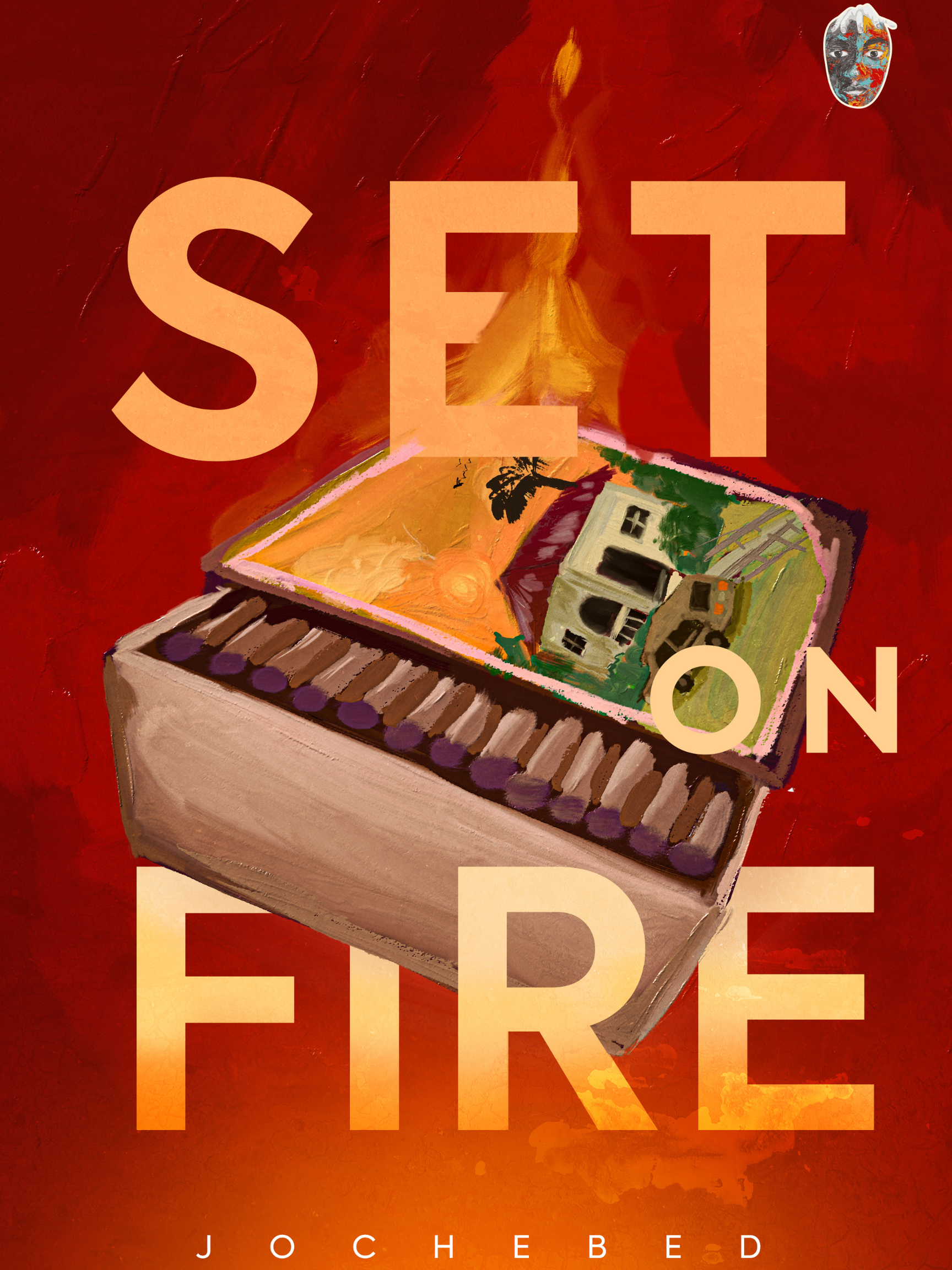
I wonder what it would be like to set your new house on fire.
My brother and I went there, your guests, for the first time since we had graduated from university, the ones that you refused to pay for. It was after our uncle, your brother, died. He had already been buried in the land of the free, where he had been living long before I had been born, a distant fruit on your family tree.
I had only met him once before, back when I was still shorter than you and you were still everything I imagined you to be. You were almost shy in his presence, this older brother whose life outside the continent meant you took his place at home, the quasi-eldest, the one your other siblings called when it was time to marshal everyone into line.
“It’s a family reunion!” you kept saying. “A family reunion.” It was a miracle, to you, to my mother, that you were seeing him after so long. Probably long before I’d been born. You smiled so much that day, brimming with that eager awkwardness when you were in the presence of someone you held in high esteem.
You never saw him alive after that.
You and your siblings wanted the chance to mourn him at home, so you decided to do so at your house, the house of the now-oldest son of the family.
My brother and I didn’t want to go. Why pretend? Why be seated in the presence of my enemies when rage seethed beneath my skin, a sickness no tablet you prescribed could cure? To be with people who stood by and watched as you washed your hands of us, shaking us out of your duties like dust off the stuffy asoebi in my mother’s drawer.
But our mother insisted we go. She was determined that we represent her well, that we gave no reason for anyone to speak more ill about her. You were still our father; we were still to honour you. We were not to give your side of the family any more reasons to crucify her, to claim that she had spoiled us like the eggs you said she treated us as.
So, we wore the asoebi that your family chose for the memorial service—a bright cobalt-blue veined in streams of aubergine-purple within maize-yellow. It was striking, more so than what you chose when you wedded your new wife without telling us.
It was my uncle who broke the news to me. I was sitting at his table, demolishing my first proper plate of food after I’d spent the entire day packing three and a half years of my life into suitcases and plastic storage boxes from Walmart. Running across campus to return pots and pans, almost breaking down in the International Student Office because this life as I knew it was ending and what was my plan?
Anyway—the food. Jollof rice that my uncle’s American wife had made. Smokey, spicy, too spicy for me, who had never been able to take the heat. Sausages—salty, as I normally liked them, but maybe too salty. Very on-brand for the U.S. I was probably not eating like a lady, when my uncle spoke.
“Did you know that your father has remarried?”
Pause. Swallow. I looked at him. He had this way of speaking, his accent clipped, as if he thought very hard before he said anything. I imagine that he knew there was no easy way to say this of you, so he said it all at once, before he could take it back.
Later, my mother would show me the photo of your traditional wedding ceremony. You were both dressed in bloodied lace. The image swam in my mind. I didn’t know how to feel. I didn’t know what to feel. I didn’t feel anything. Just like in secondary school, when your marriage to my mother first started splintering. A jar filled with cotton balls.
I called my mother immediately.
“Dad has remarried? He has a new wife?”
It was then my mother—still your wife in the eyes of the law—told me how a curious former coworker had sent her the damning photo. Had "innocently" asked: “Is this your Dr. Harrison or another one?”
“He’s the one,” my mother had said.
•••
I wonder, not for the first time tonight, what it would be like to set your new duplex on fire.
What would the flames catch on first? Maybe those ridiculous pink enamel flamingos that sit beneath your tear-rubber flat screen T.V., all modern geometric edges and none of the softness of their living counterparts. Would they melt the pristine PS4 that belongs to my new brother—or uncle?—in-law, the black plastic dripping out of its perfect shape and onto this rug you have managed to keep clean when the one in the house I grew up in was always filthy?
My brother and I had a Wii growing up. You didn’t buy it—it was gifted to us by our cousins, the children of the same American uncle—but you did buy the step-down transformer we needed for it to work in our house in Gwarimpa, the one with the pimply-paint walls, as if no part of the paint wanted to lay down smoothly. My brother and I travelled worlds with that Wii, cutting down bubble-headed enemies with faux-lightsabers. He favoured tennis, but I was the boxer.
“I’d be Muhammad Ali, but you’d be George Foreman,” he joked. But I was timid, even as a child. For all my height, I could never land the right hits on school bullies, descending into tears whenever I felt pushed or intimidated.
During the divorce, Mum left you the A/Cs, but I can’t remember what happened to the Wii.
What would the smoke smell like, I wonder? Perhaps, like the sticks of incense you lit when my brother and I arrived to inspect your newhouseandyournewwifeandyournewlife.
The houses we shared with you growing up smelled like AirWick, the kind that spritzed out of those fancy wall-dispensers you were obsessed with because everything had to smell like a new car would. (In the last house we lived in, Before The Separation, the batteries gave out promptly. You never replaced them.) They smelled like the sausages my mother fried on Saturday mornings as she gave us a taste of her time in England, the taste of frying lingering in everything, even the Milo we drank with the sausage sandwiches we devoured like the luxury we knew they were.
My mother hated—hates—how incense reeks. When I shop for perfume, she wrinkles her nose, besmirching that Hausa-ish scent I’ve grown to favour. When I wanted to smother myself and my clothes in Elizabeth Taylor’s White Diamond, she’d accuse me of trying to kill her and my brother, both of whom had always been sensitive to smells. (When he eventually goes to school, my brother will be prescribed the same medication given to asthmatics as he battles the Welsh cold – go figure.)
But your car always smelled of something—a scented, Christmas-tree-shaped cardboard hanging in front of the air vents; things bought in traffic, in stores. My mother’s Kia smelled of nothing but crisp leather, back when leather was still real leather and it tasted bitter when I licked the back of its car seats.
Before we crossed into your parlour, you and your (new) wife and her family left your shoes at the door. It’s funny because you never cared about the blood that you spilled on our living room floors from when you stepped out on my mother and tore her heart raw. Not when we left you for the first time, me bundled in the back of Aunty Sola’s hiccupping station wagon, crammed in on all sides like sugar in a St. Louis box. You held on to the handrails of the house I went to boarding school from, your face pinched in that way it always did when my mother complained you were eating too much and you got up to throw away your rice and beans in response. (I inherited that from you—both of you, maybe—this impulse to hurt someone I loved by hurting myself so they could notice.)
It was what I felt when I found out about the Other Woman. I will always say that, when I read the incriminating texts, I felt nothing. Not grief, not sorrow, not even rage. All of that would bubble up later, hot oil when attacked by water: in the silences when you would take me to and from secondary school, the ways I would snap at you when you asked me questions. Always self-aware, I would complain to my mother that I was being mean to you and I didn’t know how to stop.
“You’re angry at him,” she’d say. “It’s understandable.”
But I was never allowed to be angry with you. I was to honour you; I was to obey you. I was to pretend not to be insulted when I sat in a duplex larger than the bungalow I shared with my mother, now your ex-wife, as your new wife’s family camped about, filling the house with pidgin English and noise. I was to pretend not to find it bizarre how the kitchen was cordoned off by a beaded curtain, something else that would have never existed in any of the houses we shared with you growing up. I was to pretend to be dignified, to be respectful to aunts that had sat by when you shirked your responsibilities to us, wilfully unaware of what my mother was doing to fend for the children you had sired. To pretend that I wasn’t suspicious of this new wife, so much so that I immediately refused her offers of food.
I wished that I were different. That I was wild, shards of glass instead of cotton wool. That I was one of those characters in African Magic who seethed as easily as they breathed. That I would flip tables like Jesus would, or embrace violence like Patience Ozorkwor. Mama Gee would never have taken this insult, hearing you and your new wife banter about where my brother got his brains from.
I wish I were like you—that I could make a home burn and not give a damn about how the flames would swallow up the wife and the child and the gorgeous memories that made it more than its four walls. I wish I could set your new house on fire.