A Small Life
Nene no longer went out at night; she was scared she’d be kidnapped. When it started, they only took rich people, people who could afford the outrageous ransoms the kidnappers demanded. But rich people began moving around with armed police escorts and private security. They built taller fences for their houses and installed alarms. Everyone else became fair game when rich people became too difficult to kidnap. At first, the kidnappings were reported on the radio, and although they were terrible, they seemed far away, benign, not something that can happen to regular, everyday people. Nene became paranoid when her neighbor, a banker, was kidnapped on her way to church on a Sunday morning.
Her neighbor was released after twelve days. The kidnappers had called her husband with a private number and demanded a ten-million-naira ransom. It took two days of begging before they agreed to accept four million instead. Her husband didn’t report to the police. The week before his wife was taken, ten policemen were abducted, and their families had to pay ransoms before they were released. It took the neighbor’s husband ten days to raise the money. Everyone pitched in—the church, neighbors, family members, and well-meaning people on the internet. When Nene’s neighbor came home, she looked emaciated. Her collarbones, which Nene had never seen, were now prominent, and her eyes were puffy from lack of sleep.
Nene kept her doors locked at all times and only went out in the evening. She believed kidnappers operated early in the morning and late at night. She listened to the radio more often and avoided areas where people had been kidnapped. She stopped wearing her wedding ring. Nene didn't want kidnappers to get the wrong idea if she ran into any. A ring on her finger meant she had a husband, someone they could expect to pay a ransom for her.
She did have a husband, well, until he died last year in a motorcycle accident. He had been on his way home, maneuvering his motorcycle expertly, looking for small pockets of space on the clogged Apapa highway. Something had gone wrong, and he’d ended up under the tires of a water truck. The truck driver hadn’t stopped, but other okada riders chased him and set him on fire when they caught him. Nene normally would have condemned this act of mob justice; instead, she found comfort in it. She liked that her husband’s killer was dead and that he died violently. It felt just.
Nene missed her husband.
They’d been married for only five years. His snoring had annoyed her; it was too loud, too raspy, but now she missed that sound. She missed how he smelled in the morning, that slightly musty smell of sleep. She missed the treats he brought home every night after work. He never came home empty-handed. He always brought her something: spicy suya coated in yaji, saucy chicken shawarma, fried yams, akara, puff-puff, crunchy milk biscuits. She wished they’d been married longer, long enough to quarrel over unimportant things as old, grumpy couples often do. He had an innate softness that was atypical in Nigerian men, a tendency to do good, to please.
He was always home at 9:00 p.m. and, anticipating his arrival, Nene would have a warm bath ready. He loved how the water steamed up the bathroom during his bath, but he was never patient enough to change into his pajamas before stepping out. He’d emerge from the bathroom with a towel tied to his waist, his face dripping water on the floor. He never managed to get rid of all the suds—some would cling to his full, lush beard, and sometimes they would be behind his ear. He wasn’t self-conscious; he changed in the sitting room, unbothered that she was there or that the curtains weren’t covering the windows. Often, she looked away, and this made him laugh.
“Why do you always do that?” he’d ask, laughing. “You have seen me naked more than anyone else.”
“Stop,” she’d say shyly, an awkward smile on her lips. “It’s different.”
She’d liked him and their unambitious lives. They lived in a room-and-parlor self-contained apartment in Ketu. Nene had loved the predictable nature of their lives, even the difficult parts. She’d learned to sleep through the noise of generators, to look for joy wherever she could find it—in the savory taste of spicy jollof rice, the cool evening breeze, the earthy smell of rain, or her husband. She knew they would never escape their pedestrian upbringing. They were one of those people who would never own a house or car. Their lives would be unheralded. No one would write newspaper articles about them, and they would never be on TV.
Nene, like everyone else who lived a life that floated in the space between lack and having just enough, had found useful coping mechanisms along the way. Complaining helped, especially when the problem was communal. That way, the weight of the discomfort was shared and the load was a little lighter, a little easier to carry.
Nene made peace with her station in life after she dropped out of school when she was thirteen. Her mother’s meager income from petty trading had gone into paying her father’s hospital bills rather than her tuition. He died in the hospital, his skin an unnatural muddy yellow: liver cirrhosis. His lifetime of alcoholism had caught up with him. Her mother should have left him to die; Nene would have if she were the one calling the shots. He was no good to anyone alive.
***
Nene learned petty trading from her mother by being a passive observer. Her mother sold smoked fish and fresh vegetables. Nene learned how to pitch her voice just so to attract attention, how to smile and whisper conspiratorially to show feminine camaraderie, how to offer compliments and small bits of unsolicited advice that showed her customers she cared about them without being intrusive. She learned how to bargain with farmers whose produce she and her mother sold and how to finesse them with sweet talk so that they shaved off a small fraction of the total price or gave her more produce. She’d just about learned everything about trading before her mother died of breast cancer.
Nene sold foodstuff too. But she sold grains. Grains were dry and hardy and never went bad. Her mother’s fresh vegetables stunk up the house when they were rotten. She didn’t need to work too hard. She wasn’t sad on the days she sold little. Her husband made enough money for the kind of life they lived: a small life.
***
Asuku was different. The first time they met, Nene had been stranded at Mile 12 Market. She’d lost her bus fare. She’d stood by the road, fidgeting, panicking, and trying her best not to cry as the evening slowly turned into night. Many okada riders had been sitting on their okadas, waiting to be hailed by customers, but none noticed her discomfort, except Asuku. He’d ridden his okada to where she was standing and asked what the problem was. He’d offered to take her home for no charge. She’d been scared, but something about his demeanor made her relax. He had a kind face, and his smile was open, inviting. She’d thanked him effusively and asked for his phone number. It didn’t take long before they started dating.
Their marriage had been inevitable, almost anticlimactic. They knew they would end up with each other after two months of dating. They’d married after one year so they would not be judged for rushing into marriage by their friends.
***
Nene didn’t remember the exact moment she became wary of men. She was sure it had something to do with living in Lagos. Or maybe it was because her father had been a useless man. Her father had stolen from Nene and her mother often, taking but never giving. He was a constant source of anguish. Although no one said so, everybody knew all the kidnappers were men.
Once, a man followed Nene on the pedestrian bridge at Ikeja. It was late. She quickened her steps and the man quickened his. She looked around. There weren’t many people on the bridge. The few people on the bridge were junkies sleeping off their highs. She started running, and the man ran after her. He was saying something, but she was too terrified for it to make any sense. He finally caught up and overtook her. He held onto the railing to catch his breath. Nene remembered feeling cornered.
“Madam, I just wanted to give you your purse,” he said between breaths. “It fell out of your bag.”
She felt silly then. The man wasn’t a kidnapper. And he had just saved her from embarrassment. That purse contained all the money she’d made that day.
“I’m so sorry. I was scared. Thank you, sir,” she said, flushed with relief. She wondered briefly if she shouldn’t have run or if she should have assumed better of the man, but she knew she would run if the same thing happened to her another day.
Nene was grateful that she didn’t have a child. She’d wanted one when Asuku was alive, but she was no longer certain she’d be a good mother now that she’d have to mother alone. Asuku hadn’t been keen on children. He’d liked their life the way it was and thought a child would complicate it.
She kept all his things. His clothes still hung in his small closet; they smelled of him. The bristles of his toothbrush had become brittle with unuse. His pictures still hung on the wall; he was smiling in all of them. Nene was afraid she would forget him if she got rid of his things.
***
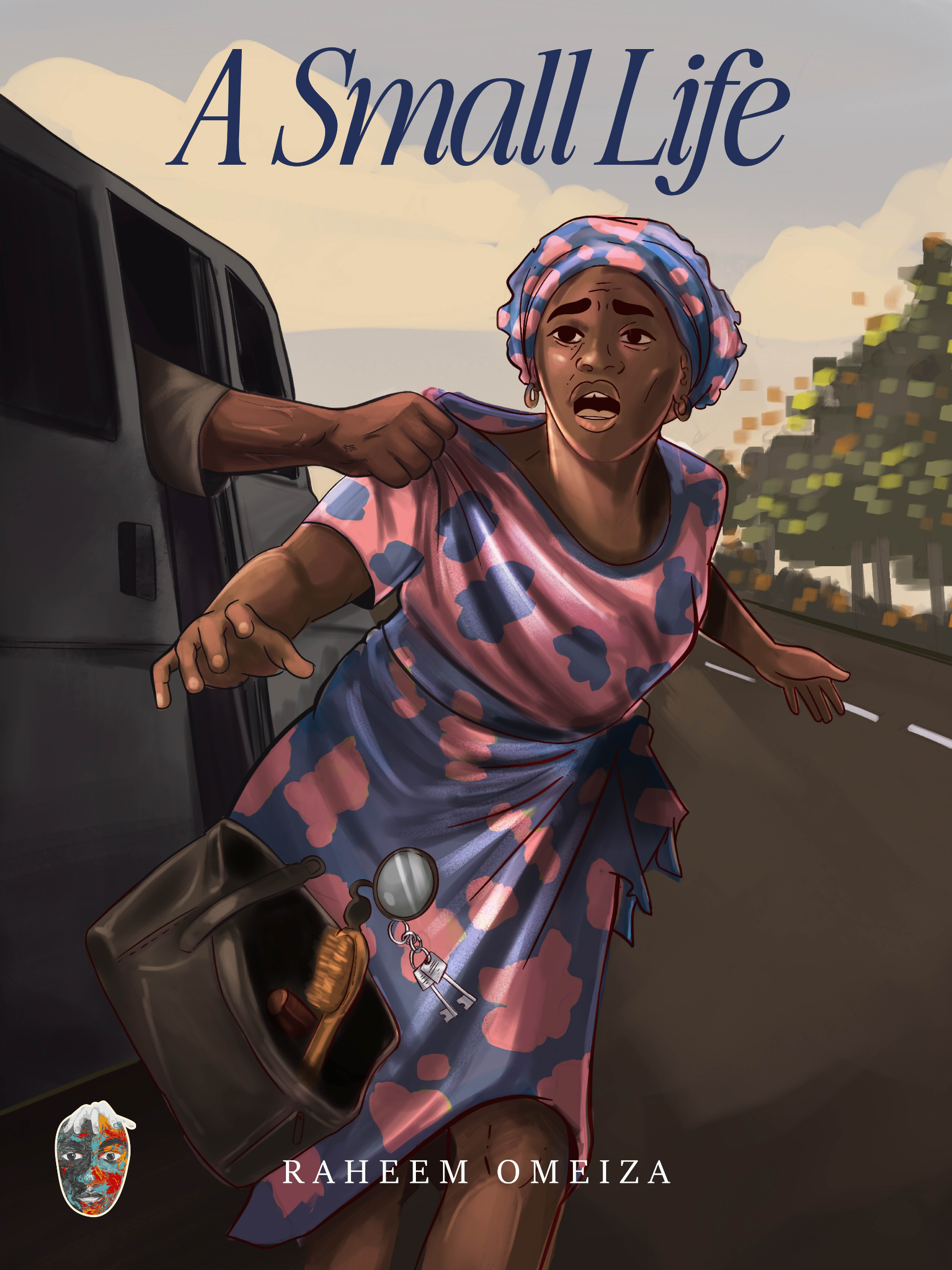
The day Nene was kidnapped, she had been on her way home from an evening stroll. It was a Friday evening, and there was still some daylight left. A van had screeched to a halt in front of her; two masked men had rushed out, grabbed her, and thrown her into a van. She had been so surprised that she forgot to scream. In the van, one of the men held a small penknife to her throat.
“If you shout, e go be your last shout before you leave dis world,” he said in pidgin. Nene didn’t shout. The other masked man tied a black cloth over her face and stuffed a small rag into her mouth. Her hands and feet were zip-tied.
When the van started moving, she felt a slow wetness spreading down her legs. It took her a few moments for it to register as urine. One of the two masked men with her in the back of the van yelled, “Wetin you dey do?”
Sorry sir, Nene wanted to say, but she was gagged.
Nene began to sob quietly. The cloth was tied so tightly over her eyes that she saw blotches of red instead of pitch black. She thought about their masks and shivered. The man who grabbed her had been wearing an oval face-shaped mask splattered with spots of orange, white, and black. The face the mask showed looked as though it was petrified into a permanent scowl. The mouth, slightly open, revealed teeth mid-snarl. The other man had worn a mask with half-lidded eyes outlined in deep blue beads, the narrow slant of its mouth betraying no emotion. But something about it commanded respect. Nene was convinced the masks were charms.
After a while, the van veered off the highway onto a dirt road. Nene could smell vegetation in the air. The men rode with her in silence. The sound of twigs snapping under the van's tires and the sound of driving—changing gears and the creaking of the driver’s seat—were the only sounds she heard for a few hours.
Her phone rang. It tore through the silence like a bullet. Everyone jumped, including Nene. All three of them—the two men and the driver—began to talk at once.
“You fools didn’t search her bag? What is wrong with you people?” the driver said. He sounded educated, posh.
“Why you no tell us say you carry phone?” one of the men asked. “You tink say you dey wise?”
She heard the contents of her purse as they landed on the metal floor of the van. Her keys made a harsh sound. She heard her phone play the tone it played when it was turned off.
“Remove the SIM card and battery,” the driver said.
“Okay, oga.”
A few minutes later, the driver killed the engine of the van and got out. He opened the sliding door to the loadspace.
“Madam, get up,” the driver said. Nene could tell it was the driver. His voice was much deeper than the voices of the other men, and he spoke proper English.
Nene tried to get up but couldn’t. Her legs were frozen. She had been sitting awkwardly for hours, and her legs failed to carry her. The two men who rode with her grabbed her by either arm and lifted her out of the bus.
“Take off her gag and blindfold,” the driver said. It was clear he was the brain of the kidnapping gang.
One of the men untied her blindfold and pulled out her gag. He also cut the zip tie that bound her hands and feet with a small pair of pliers. Everywhere was dark; there was no moon that night. She’d lost her shoes when she was abducted, so she was barefoot. She could feel the undergrowth beneath her feet. They were in a forest. There was a chill in the air. Nene shivered. She could make out the outline of the men, but she couldn’t see their faces. She didn’t know if they were still wearing masks.
“Madam, screaming will not help you much now. No one will hear you. We are in the middle of nowhere,” the driver said. He was calm. “So save yourself the trouble. We do not want to harm you. Do as you are told and you will be fine.”
“Please, sir, I don’t have–”
“We will talk tomorrow morning,” he cut her off. “My friends will take you to where you will sleep. We won’t harm you.”
Nene nodded.
The two men who rode with her led her to a small, windowless room. Nene wondered how they could see. She couldn’t see anything. Maybe their masks improved their eyesight. She heard the lock click, and once again, she was plunged into darkness.
Inside the room, she went on her hands and knees and felt her way around. There was a thin mattress close to the wall. Near the mattress, there was a small plastic bottle filled with what Nene assumed was water because she couldn’t see what was inside. The room seemed to contain nothing else. The air in the room was stale, and her soaked skirt made the whole room smell of urine. Nene lay on the mattress and let out a long sigh. She had a headache and she was tired of crying. She was certain she was going to die. She had no one to call. She felt around for the bottle and hoped it contained poison, but she was right; it was water. She took a large gulp and laid back down. She closed her eyes and waited for sleep to steal her.
Nene woke up the next morning, grateful that she was still alive. She didn’t remember going to sleep. Her head was throbbing, and her left side, the side she had slept on, was numb. Her breath smelled rancid. She said a quick prayer, unsure if her predicament moved the needle with God. She wasn’t particularly religious; she prayed every day, but it was without fervor and mostly out of habit.
She heard movement outside and sat up. The lock clicked and the door opened. Daylight streaked in and a whoosh of fresh air came along with it. Nene took a deep breath. The driver came in first. He looked older than Nene had assumed he was. He was almost elderly. He was completely bald, and his beard was more gray than black. His associates, now without their masks, were much younger; they could pass for his sons. The driver squatted so that he was at eye level with Nene. His two associates stood, one on either side of him.
“Good morning, Madam,” he said. “I hope you slept well.”
“Yes, I did,” Nene lied. It felt like the right thing to say.
“We are sorry for the inconvenience this has caused you. You look like the kind of person who would understand and not take it personally.”
Nene nodded.
“Your breakfast is on the way,” he said.
“Thank you,” Nene said.
“Do you have someone we can call, you know, to discuss your ransom and release?”
Nene didn’t reply immediately. She didn’t have anyone, but honesty would get her killed. She wished Asuku were still alive, just so that she would have someone to call. She knew lying was the best thing to do, but she changed her mind and told the driver the truth. Stalling meant she would suffer and still die. She’d rather die quickly.
“No,” she said. “I am an orphan, and my husband died last year. I am sorry, I don’t have anyone.” She felt strangely good.
The driver was quiet for a while. He hadn’t expected that answer. Perhaps this was the first time he’d kidnapped someone who wasn’t desperate to live.
“Madam, are you sure? You don’t have family members? Brothers? Sisters?” he asked.
“No, I am an only child. My husband was the only person I had, and he is dead.”
“Someone was trying to call you on the way here. Who was it?”
“I don’t know. It’s probably a customer who wanted to buy something. I am a petty trader,” Nene said.
“We will give you more time to think about someone we can call.” They left, but this time they left the door open. Nene thought they wanted her to run so that they would shoot her and not feel remorse. She was happy she didn’t have to be in the dark all day.
Now that Nene knew she faced certain death, she was terrified again. Her moment of bravery was over as quickly as it came. She suddenly wanted to live. Her hands began to shake so she sat on them, but then her entire body started to shake.
One of the two men who rode with her in the van brought Nene food—fried eggs and a small loaf of bread. He looked very young; he was probably a teenager. She wondered if he was the driver’s son. The eggs looked rubbery. He set the plate down and placed the loaf of bread beside it.
“Madam, your food,” he announced.
“Thank you,” Nene said.
“I go leave the door open. If you like, run,” the boy said. “You go just lost.”
“Thank you, sir,” Nene said.
“If you wan piss, go outside and piss.”
“Okay. Thank you, sir.”
He turned around and left the room. Nene barely touched her food. She ate a small piece of the bread but left the eggs untouched. She took small sips of water from the water bottle. After enough time had passed, she stood up and went outside. There was another small house a few yards away from hers. It was built entirely with raffia. Everywhere else was covered in tall gmelina trees as far as she could see. She wouldn’t even know which way to run if she wanted to run. She was never going to leave this place, and worse, no one would find her body. She pulled down her skirt and squatted down to pee.
She came back inside and lay down on the thin mattress. She slept fitfully. She had nightmares. In one of her dreams, a lion chased her in the forest, and when the lion was about to catch her, she floated away into the sky. In another dream, she was in a well, drowning. When she took her last breath, she turned into a bubble.
When she woke up, it was late evening. The sun had turned sunset orange. The driver was standing over her, staring at her. He was holding a white plastic chair in one hand, which he set down and sat on. He had a curious expression, as though he’d caught Nene doing something weird. She didn't know how long he’d been watching her.
“Good evening, sir.”
“Good evening, Madam. I hope you slept well.”
“Yes, sir.”
“Tell me about your husband,” the driver said. “I want to know the kind of person he was. What did he do? How did he die?”
His questions caught Nene off guard. She wasn’t prepared for that line of questioning. “Sir? My husband?” she asked, confused.
“Yes, your husband. You said he was the only person you had until he died. So tell me about him.”
“He was—” Nene paused, suddenly self-conscious. “He was a good man.” Tears clouded her eyes, but she wiped them off before they could fall. The driver was looking at her.
“His name was Asuku and he was an okada rider.” Nene paused, unsure of what to say next. How does one describe a life, summarize a person? Plus, this information wasn’t the kidnapper’s to demand.
The driver looked at her expectantly, willing her to continue with his eyes.
Nene swallowed and continued. “He left for work at dawn every day and returned home at 9.00 p.m.—sometimes earlier and sometimes later—except on Sunday. He didn’t work on Sunday. He stayed at home and slept in. And we made love when he finally woke up.” She wanted to stop talking but she looked at the driver and saw the eagerness in his eyes so she stretched her legs in front of her and continued. “He was an attentive lover, the kind who stopped to ask if I liked something he just did. He ate like a child. He couldn’t eat okra soup without leaving several stains on his shirt.” Nene was smiling now, at the memory of Asuku. “Often, he went out with his shirt inside out and wouldn’t notice until he came home and I pointed it out. He’d shrug and say, ‘No one noticed.' He died one year ago, on a Saturday. A truck crushed him and his okada. He died instantly. He didn’t suffer.”
When Nene looked up, the driver had his hand on his chin. He was staring intently at her. The room was much darker now; dusk had sneaked in on them.
“Hmm,” the driver sighed. One of my men will bring you your dinner soon. We’ll talk some more tomorrow. He left with his plastic chair and locked the door behind him.
Only then did Nene allow herself to cry.
***
“Madam, wake up,” one of the driver’s associates said. She could tell them apart now. This one’s voice was gruff, like he had a cough, but Nene had never heard him cough. He was holding a small, battery-operated torchlight.
Nene got up. She knew it was early in the morning because the door was open and no light filtered into the room. The day hadn’t broken yet. It was dark and cold outside.
“Where are we going?” she asked, apprehensive.
“I don't know,” he replied. “Do your hand like this.” He held out his hands in front of him to demonstrate. Nene held out her hands. He dropped his torchlight on the floor and tied Nene’s hands together at the wrist with two zip ties. He led her outside. Nene could hear the low hum of the van outside. The door was open, and the other man was waiting by the door.
Nene thought they were finally going to kill her. They were probably taking her to the lagoon, where they’d dump her body.
“Good morning, Madam,” the driver said.
Nene didn’t reply. She didn’t have to be friendly with him anymore. She climbed into the van and sat down, legs stretched out. The two young men climbed in with her; they weren’t wearing their masks. The younger one shut the door, then gagged and blindfolded her. He shouldn't have bothered. She couldn’t see anything, and she wasn’t going to shout. No one would hear her anyway.
They drove in complete silence. The van stopped after a few hours. “This is it,” Nene thought. One of the men cut the zip ties that bound her hands. Nene’s heart was beating fast now. It was all she could hear: her heartbeat. The men helped her out of the van, still gagged and blindfolded. She didn’t hear the van drive away. She just stood there, waiting to be shot or stabbed and thrown over a bridge. Nene didn’t know how long she waited, but she moved her hands and they moved. She pulled out the rag inside her mouth and untied the rag covering her eyes. She opened her eyes slowly, expecting to see the van and the three men. Instead, she saw an empty road. She was standing exactly where she had been kidnapped. It was dawn and the sun was just starting to rise.